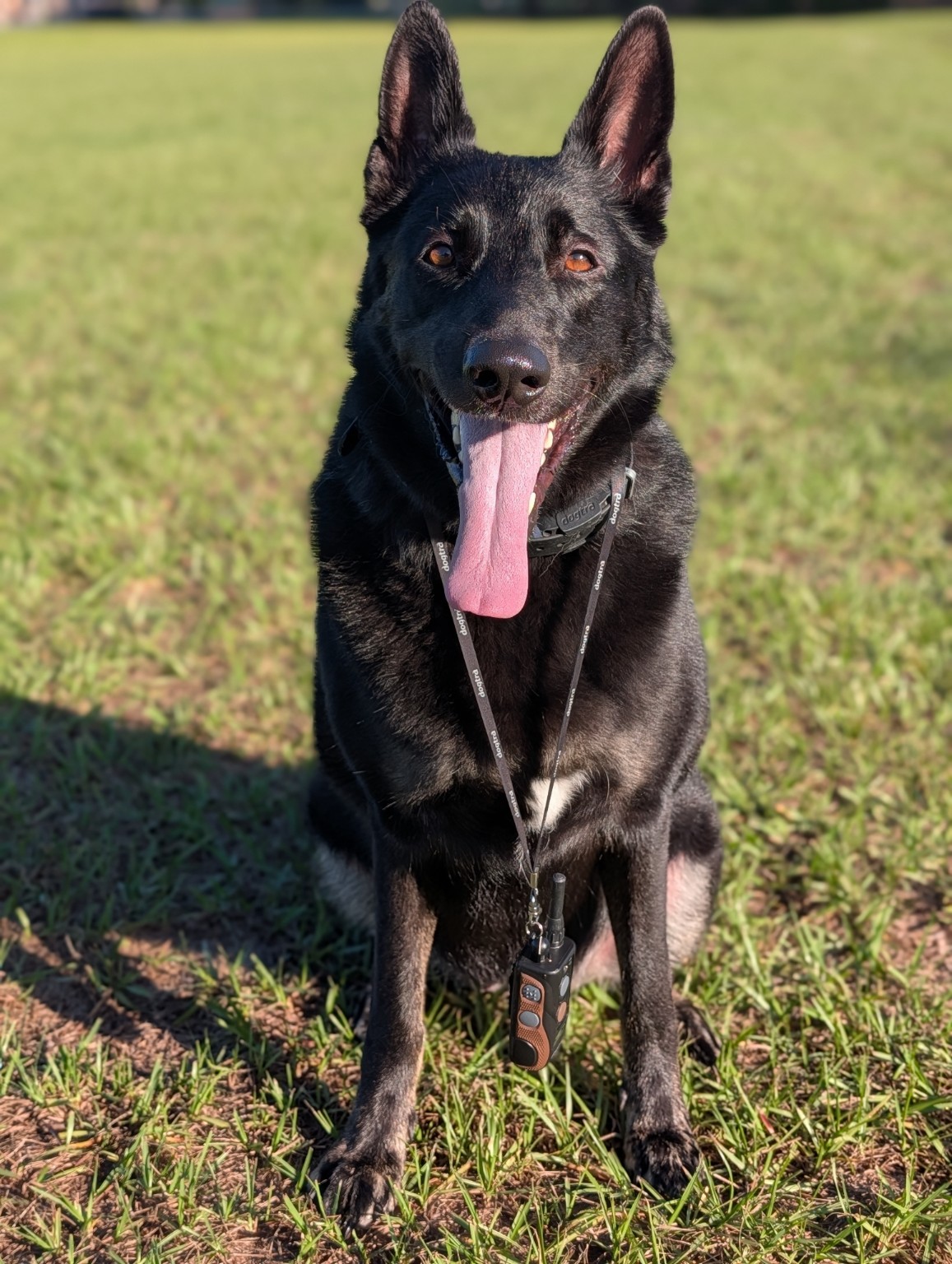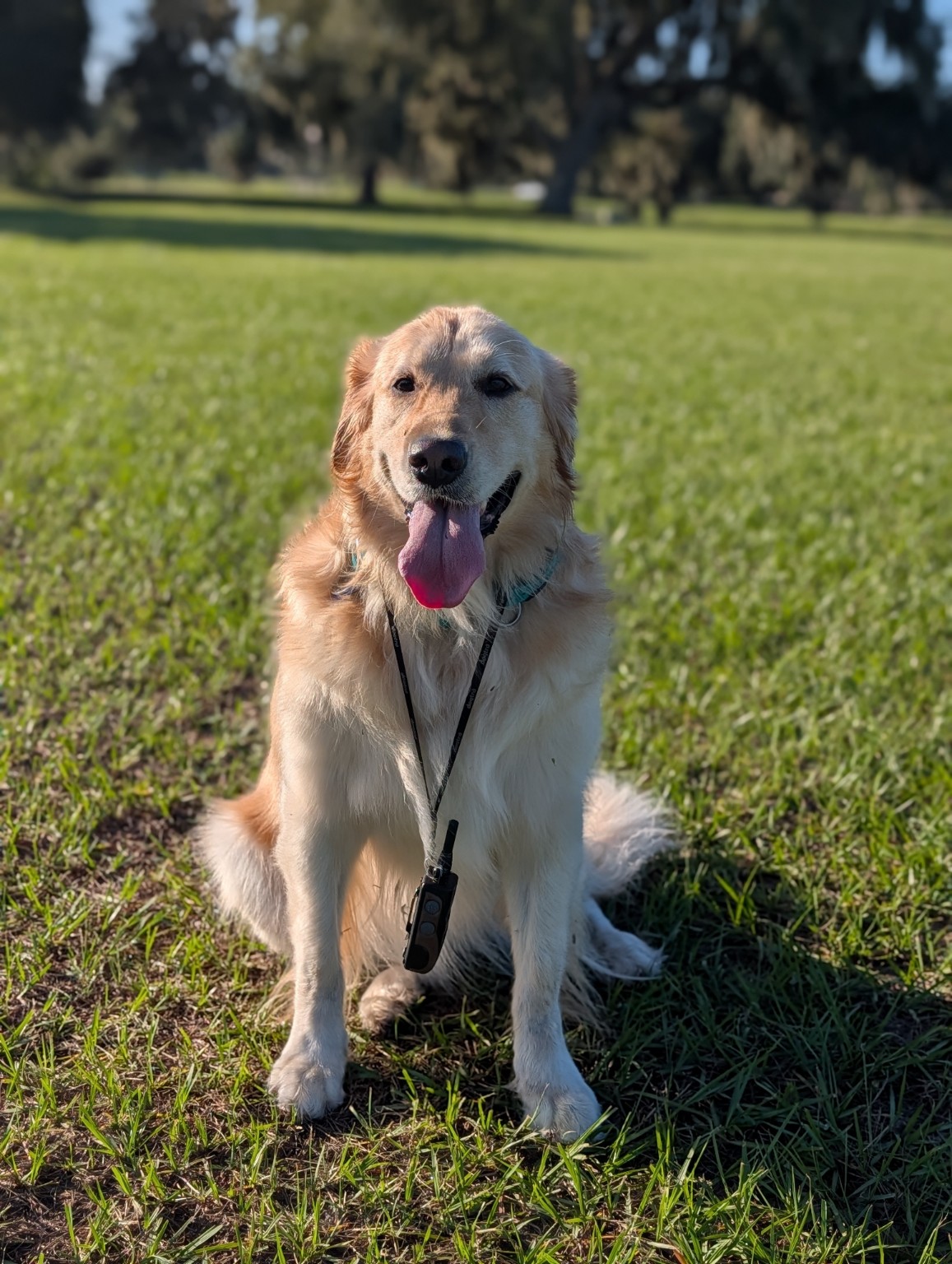
As a kid, Gus genuinely thought "K9" was specifically what German Shepherds were called — because police cars said K9. He learned later that canine means dogs in general. He also learned, once Athena came home and reality set in, that for his first dog he'd somehow managed to select hard mode.
When Athena came home, Gus knew almost nothing about training. As she grew into her full personality — strong, confident, very much her own opinion about everything — winging it stopped being an option. For roughly the first six months it was near-obsessive: listening to trainers while working, watching videos, reading, comparing methods, studying different theories, practicing, figuring out why something worked for one dog but not another. It drove Jos somewhat crazy.
Echo joined the family about three months into that process, on the theory that a second dog might calm Athena down. It did not calm Athena down. But Echo was so different from Athena in temperament that training her became its own education. Between the two of them, Gus got a crash course in how differently two dogs can experience the same world.
That initial intensity never really stopped — it just became part of how Gus approaches the work. He deliberately tries to learn from as many trainers and schools of thought as he can get his hands on, including ones he doesn't entirely agree with. Disagreeing with someone doesn't automatically mean they have nothing useful to offer. The questions he keeps returning to are: why does this work, when does it stop working, and what does that tell me about this dog or this situation?
Gus is self-taught — intensive study, hands-on work, comparing methods across different temperaments, continued learning. The business started because people kept asking. When you've had a stranger hit his brakes hard enough that both you and your partner turn your heads to look, then double back to ask for a business card, it becomes harder to keep saying no.